.png)
Are Traditional Car Shopping Platforms Dead? Why 2026 Buyers Want Speed, Not Spreadsheets

Updated: Mar 9
By Joseph Symond, CEO of Whips Technologies
You open a car shopping site. Seventeen dropdown menus stare back at you. Make. Model. Year. Price range. Mileage. Transmission type. Exterior color. Interior color. Number of doors. Fuel type. Drive type. Accident history.
By the time you've filled out half the fields, you've forgotten why you wanted a new car in the first place.
Sound familiar?
Here's the truth: traditional car shopping sites aren't technically dead. But they're definitely on life support. And the reason has nothing to do with a lack of features , it's because they were built for spreadsheet lovers in a world that's moved on.
The Spreadsheet Era Is Over (And Good Riddance)
Legacy car shopping sites were designed during an era when more options meant better user experience. The thinking went: "Let's give buyers every possible filter so they can find exactly what they want."
The result? Websites that look like tax software and feel like homework.
These platforms treated car shopping like a data entry job. They assumed buyers knew exactly what they wanted before they started looking. Manual transmission? Check. Leather seats? Check. Backup camera? Check.
But here's what most apps missed: people don't shop that way anymore.
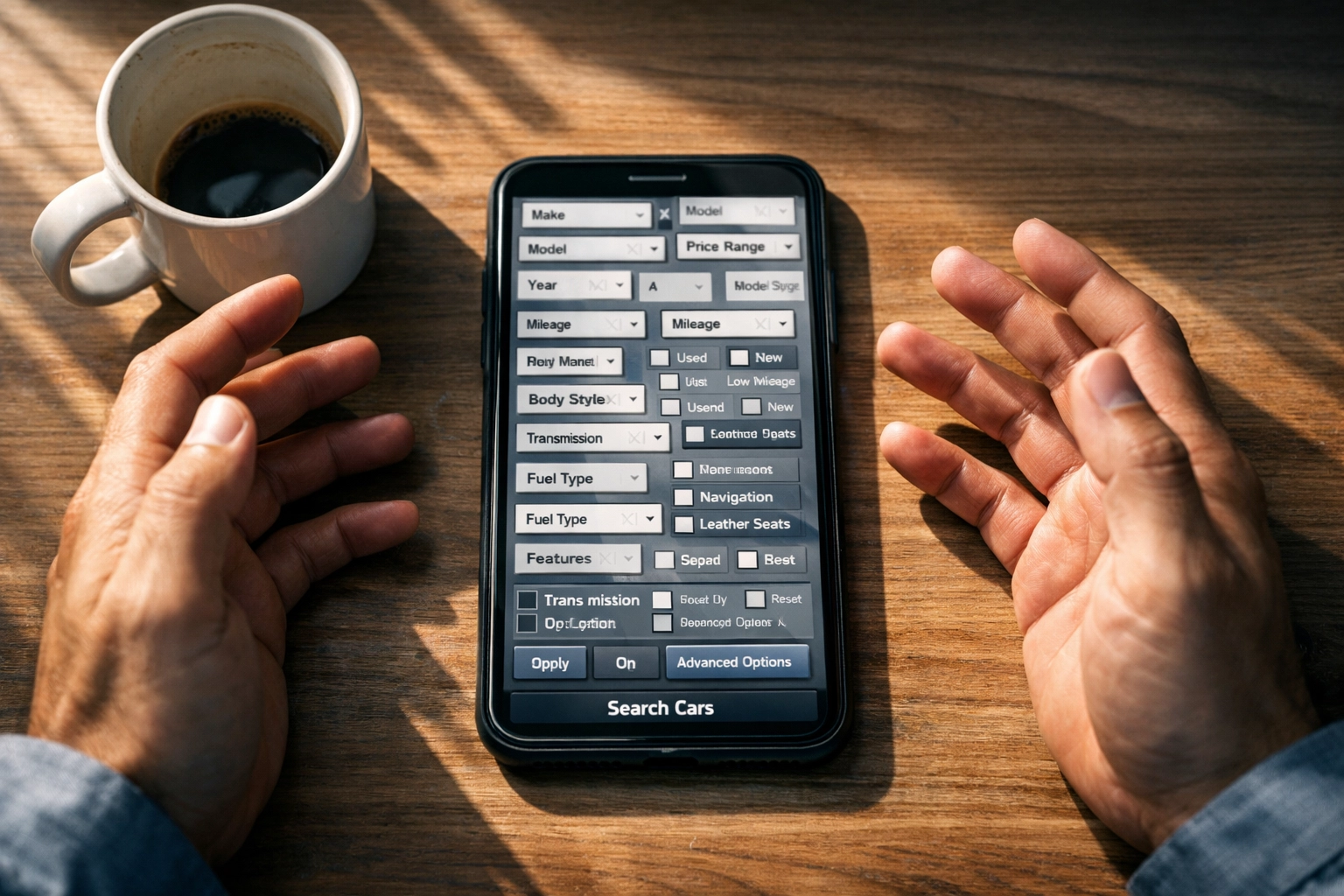
The average buyer in 2026 doesn't wake up thinking, "I need a 2024 Honda Accord EX-L with 18-inch alloy wheels." They wake up thinking, "I need something reliable for my commute that doesn't make me feel like I'm driving a refrigerator."
Traditional apps demanded precision from people who were still figuring out what they actually wanted. And that mismatch created friction , the kind of friction that makes people give up and just... not buy a car.
What 2026 Buyers Actually Want (Spoiler: It's Not More Filters)
Let's talk about what's changed. Over 70% of car buyers now start their journey on mobile devices. Not laptops. Not desktops. Their phones.
And when they pull out their phones, they're not looking to conduct research. They're looking to feel something.
Think about how you use other apps. When you open a music streaming platform, you don't filter by "tempo, key signature, and instrumentation." You tap "Discover Weekly" and trust the algorithm to understand your vibe. When you're ordering food, you don't enter seventeen dietary restrictions , you scroll, see something that looks good, and tap.
Car shopping should work the same way.
Modern buyers want speed, but not at the expense of accuracy. They want simplicity, but not at the cost of finding the right match. They want to discover their next car, not build it from a checklist.
This is where traditional car shopping sites completely miss the mark. They optimized for comprehensiveness when they should have optimized for connection.

The Hidden Problem: Analysis Paralysis Disguised As Choice
Here's something most people won't tell you: more options don't lead to better decisions. They lead to exhaustion.
Studies show that when presented with too many choices, people either make worse decisions or don't decide at all. Traditional car apps hand you 500 vehicles that technically match your criteria, then wish you good luck sorting through them.
You end up opening each listing in a new tab, creating your own comparison spreadsheet (yes, an actual spreadsheet), trying to remember which silver sedan had the better MPG versus which one had the sunroof you sort of wanted.
It's not shopping. It's project management.
And by the time you've compared everything, you're too mentally drained to actually feel excited about any of them. The joy of finding your next car gets replaced by the anxiety of making the "optimal" choice.
Speed Without Sacrifice: The Mobile-First Revolution
So what does the best AI car shopping app actually look like in 2026?
It starts with understanding that speed and substance aren't opposites. You don't have to choose between a quick experience and finding the right vehicle. You just need smarter technology.
At Whips Technologies, we've rebuilt car shopping from the ground up around one simple idea: your phone should know what you want before you do.
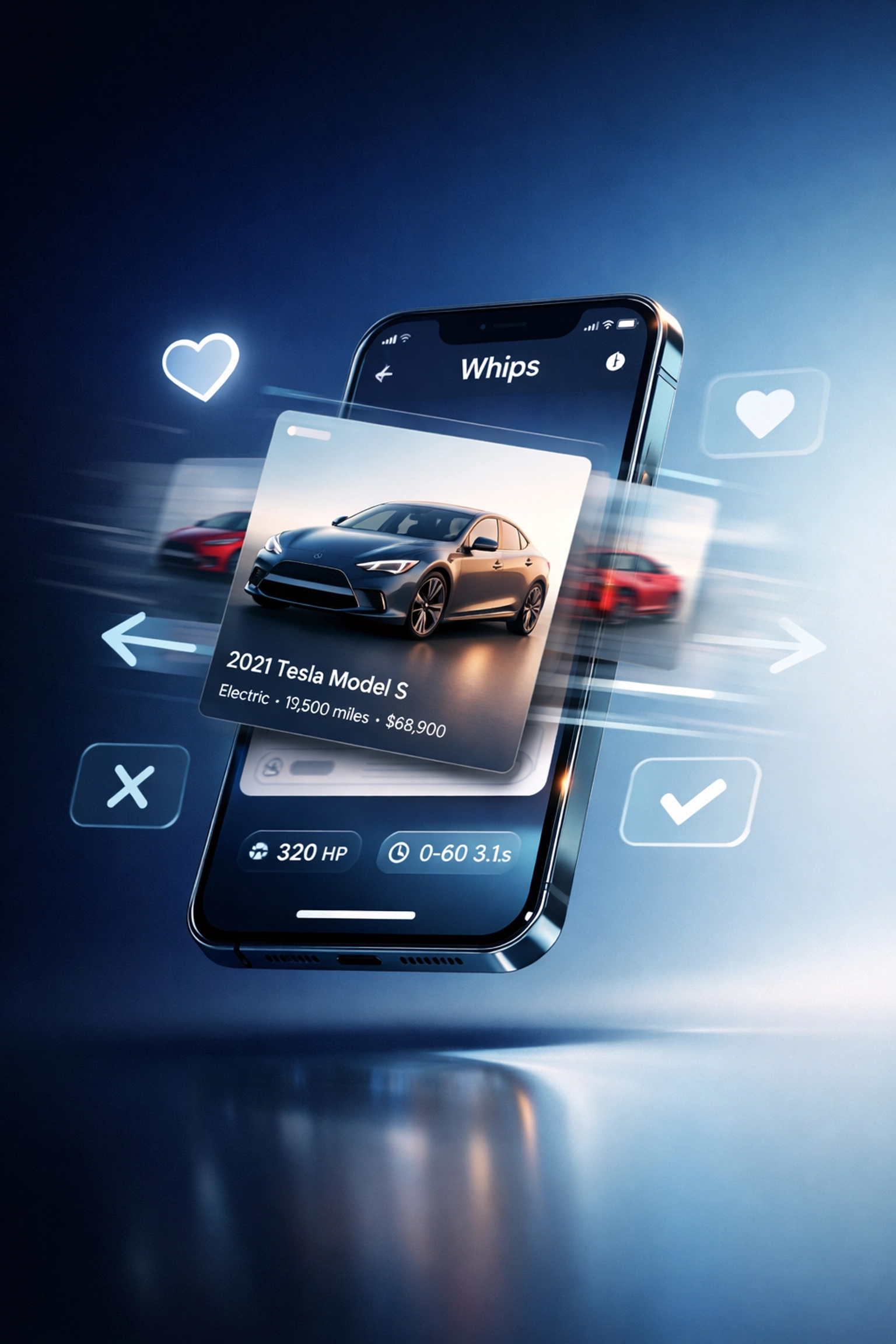
Instead of forcing you to declare your preferences upfront, we learn as you browse. Swipe right on a few vehicles, and our AI starts understanding your style. Prefer SUVs? We'll show you more. Keep gravitating toward blue interiors? We notice. Consistently choosing certified pre-owned over brand new? We adapt.

It's the same technology that powers the apps you already love : music recommendations, personalized feeds, dating platforms : applied to the car shopping experience. And it works because it respects what you actually value: time, clarity, and confidence.
The New Standard: Integration Over Complication
The shift happening right now isn't about removing features. It's about hiding complexity behind intuitive design.
Modern buyers do care about total cost of ownership. They want to understand insurance costs, maintenance expenses, and resale value. But they don't want to calculate these things themselves across multiple websites and spreadsheets.
A truly modern car shopping app integrates all of this seamlessly. You see a vehicle you like, tap for details, and instantly view real-time financing options, trade-in estimates, and even personalized recommendations based on your lifestyle.
No separate tabs. No external calculators. No mental gymnastics.
This is what mobile-first actually means : not just making a website responsive, but rethinking the entire experience for how people actually use their phones. Quick sessions. Swipeable interfaces. Instant gratification.
Why "Find My Next Car" Shouldn't Feel Like Work
Here's a question worth asking: when's the last time finding something you love felt like a chore?
Discovering new music is fun. Finding a great restaurant is exciting. Even online shopping : when done right : creates a little dopamine hit when you find exactly what you wanted.
Car shopping should feel the same way.
The traditional approach treated vehicles like commodities to be compared. But your next car isn't a commodity. It's the thing you'll sit in every morning. The backdrop for your commute, your road trips, your everyday life. It should spark something.
That's why the Whips approach focuses on discovery over filtering. We want you to find your next car the way you'd find anything else you love : through exploration, not exhaustion.
When someone uses our platform, we're not trying to give them every possible option. We're trying to show them the right options. The ones that actually match their needs, budget, and personality.
It's faster because it's smarter. And it's more effective because it treats you like a person, not a data point.
The Bottom Line: Speed Is the New Standard
So are traditional car shopping apps dead?
Maybe not completely. But they're definitely irrelevant to anyone who values their time and sanity.
The future belongs to platforms that understand this simple truth: buyers don't want more work. They want better results.
They want to pull out their phone during lunch, swipe through a few options, and feel confident they're seeing vehicles that actually fit their life. They want transparency without drowning in data. They want speed that still gets them to the right destination.
That's not just the future of car shopping. It's the present. And if your current app still feels like filling out a loan application, it might be time to try something built for how people actually want to shop.
Your next car is out there. Finding it shouldn't require a degree in spreadsheet management.
Ready to experience car shopping the way it should be? Discover how Whips is changing the game with AI-powered matching that actually understands what you're looking for.
Comments